
With 15 years of experience owning and running dance studios, there are questions that come up time and time again regarding when and how to introduce your little one to their first dance class. As a mum of 6 and a dance teacher to thousands of children over the years in many different and diverse cultural backgrounds, what I can attest to is the absolutely beautiful and unique path of every individual child.
For many parents, there is some confusion around the right time to start dancing. At home, their child loves to move and groove and they have hours of video footage of cute bum wiggles, explosive leaps and Beyonce style sass. But suddenly, when entering the studio for the first class, the enigmatic move machine is wrapped so tightly around their parents’ leg that mum or dad ends up prying her free just in time for the end-of-class stickers and goodbye songs!
So what went wrong the first time? Did they try too early? Is the class not right for them? What I’ve described above happens far more often than you’d think, and it’s more common than a child bouncing into their first class, blowing mum a kiss, and staying focused on the steps and class routine. So, what is the answer for the child who is reluctant to join in the class in the first few sessions?
From my perspective on both sides of this relationship, both as a mum of 6 and also having been a preschool teacher and dance studio owner, the most important aspect is how we respond in the moment to that child. Like everything in life, there is a journey, a process, and small steps to take to get us to the desired result with respect and healthy developing self-identities.
While we start our classes at 18 months old, we are more than aware that this is also a VERY big time in the cognitive development of a child, it’s often the peak time for “separation anxiety” and a general broadening awareness of the world ‘out there.’ This can be frightening and overwhelming for children who wish to process and understand things before they dive in to kinetically experience things with all their senses.
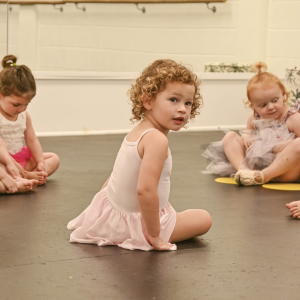
For that reason we offer classes that are parent/caregiver and child focused for quite a wide age range from 18 months through to 3 years old. Children may need a secure pivotal person in the room with them for as long as 1 to 2 years, or as short a time as a few weeks. The Tiger Tots classes we offer are just this, a safe and nurturing class where children can explore all the dance and physical movement activities they would happily do at home, with the comfort of a primary relationship present for encouragement.
Our transitional class is our Sparkles age group, from 2 years to 4 years old. This is the class where a child who has started to develop their confidence in trying new things and move a little further away from their comfort person can really start to shine. We welcome parents to journey with their own child through this process.
This is where I find parents can sometimes struggle the most. With comments like “ She’s usually so outgoing” “ I am really surprised she didn’t move, she won’t stop dancing at home!” And sometimes, parents even feel they need to apologise on the way out the door for their child’s lack of participation. This is where I say “Time out!” Let’s have a chat! Firstly well done because you ARE dancing at home with your child or giving them the opportunity to dance by playing music for them. Your child is learning so much already just through that fun and safe experience, and let’s just celebrate that for a moment!
An auditory learner listens carefully to process information, while a visual learner watches carefully, often refusing to move until they have fully absorbed the patterns and routines presented and they feel confident that they have some understanding of what is expected of them. Auditory and Visual learners may not move as quickly or as much as Kinesthetic learners. Those learners process information by moving and doing. While we also LOVE our students who are 100% kinesthetic learners, and we welcome them to the world of full body expression with joy, we also adore our quiet cautious learners who are carefully watching and listening to the instructions. We couldn’t imagine a world without them!
From my heart to yours, I hope I can give some assurance that your little cling-on is still welcome in the class, and I absolutely believe they are absorbing and learning.
So is your child ready for a dance class? If they are 18 months or older, we think they’re ready.
Why not try a full term of either Tiger Tots or Sparkles level classes first and give your child the gift of time to learn what this whole ‘dance in a group with a teacher’ business is all about?
Most children need 5 to 6 classes before they feel comfortable in the group context. A Term of 10 classes allows your child to learn, then master and succeed and with that comes a healthy self esteem boost, giving them even more confidence to try other new things. It’s usually apparent after a term of classes if a child really is not interested in a class, in which case you might want to try a different style or look into a group sport instead.
At Academy of Dance Taranaki, we have created a safe space with highly qualified dance teachers who practice positive encouragement and safe discipline for the most gentle yet effective outcome for all students. Reach out to find out more or explore our dance styles to see how they could benefit your child.







Follow Us